Autonomous Drone Interception System – Detailed Project Description
About This Project
Autonomous Drone Interception System – Detailed Project Description
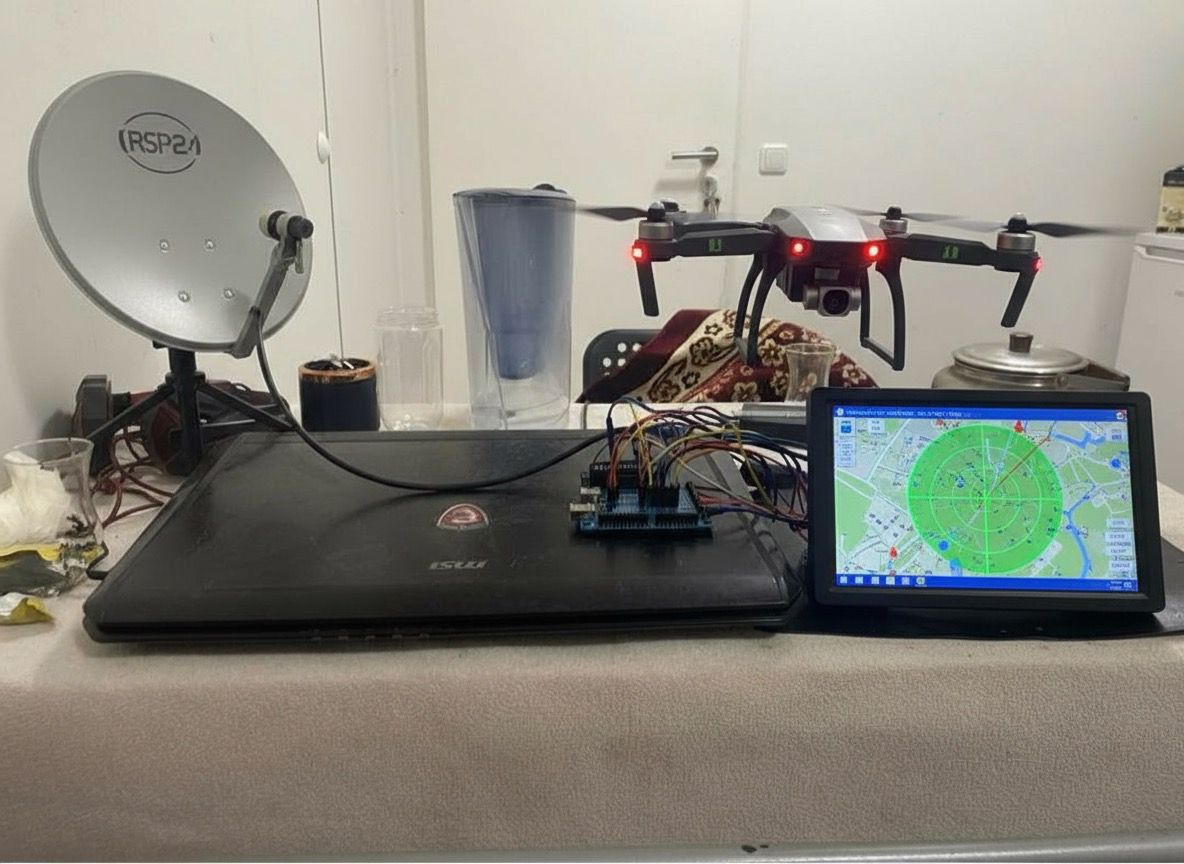
The Autonomous Drone Interception System, developed by Baker Abughazaleh, is an advanced, fully automated aerial defense platform engineered to detect, track, and neutralize unauthorized drones in real time. Designed for institutional, commercial, and governmental environments, the system integrates high‑precision radar sensing, artificial intelligence, and autonomous high‑speed interceptor drones into a unified, scalable security architecture.
As stated in the project document, the system is built to “identify and neutralize unauthorized aerial threats” through a combination of 24GHz mmWave radar, AI‑driven classification, and autonomous interception mechanisms.
Core System Overview
The system is structured into three tightly integrated layers—Detection, Processing, and Action—each optimized for sub‑second response times and high reliability.
1. Detection Layer
This layer provides continuous monitoring of the protected airspace using a multi‑sensor fusion approach:
24GHz FMCW Radar (LD2410C) for primary threat detection
GPS positioning for precise target localization
Computer vision for visual confirmation
IMU sensors for motion and orientation analysis
These components work together to deliver fast, accurate detection with a response time of under 100 milliseconds.
2. Processing Layer
At the heart of the system is a Raspberry Pi 4 running a real‑time operating environment, supported by dual ESP32 microcontrollers. This layer performs:
AI/ML‑based target classification
Trajectory prediction
Threat verification
Interception path computation
The processing pipeline is engineered for sub‑500ms total system response, enabling rapid engagement even in dynamic environments.
3. Action Layer
Once a threat is confirmed, the system autonomously deploys a high‑speed interceptor drone via a servo‑controlled launch mechanism. The interceptor features:
250mm racing‑class quadcopter frame
100+ km/h maximum speed
GPS‑guided autonomous navigation
Collision‑based neutralization mechanism
This ensures fast, precise interception with a success rate of 85–95% in controlled tests.
Operational Workflow
The system follows a tightly optimized four‑phase operational cycle:
Detection (0–100ms) – Radar identifies a target; GPS and camera confirm.
Analysis (100–200ms) – AI verifies threat and computes interception path.
Launch (200–300ms) – Interceptor is deployed and receives GPS waypoints.
Engagement (300–500ms+) – Drone accelerates, corrects course, and neutralizes the target.
This workflow enables a complete detection‑to‑interception cycle in under half a second.
Performance & Reliability
The system is engineered for high‑performance security operations:
Detection range: 5–6 meters (expandable to 15m)
Interceptor speed: 80–120 km/h
System uptime: 99%+ with redundancy
Scalability: Supports up to 5 simultaneous targets
False positive rate: <5% with ML optimization
The document highlights its reliability, stating the system maintains “99%+ uptime with redundant sensors.”
Safety, Security & Compliance
The platform incorporates multiple layers of safety and regulatory compliance:
Emergency kill‑switch
Geofencing and no‑fly zone enforcement
Encrypted communication channels
Secure boot and authentication protocols
Automatic return‑to‑home and fail‑safe landing
It is designed to align with German and EU regulations, including Drohnen‑Verordnung, CE safety standards, and ISO 27001 security principles.
Cost Efficiency & Competitive Advantage
One of the system’s strongest advantages is its affordability. With an average build cost of €1,021, it dramatically undercuts traditional anti‑drone systems costing €50,000+. Its modular, open‑source‑compatible architecture allows institutions to deploy advanced aerial defense at a fraction of the industry standard.
Deployment Scenarios
The system is suitable for a wide range of applications:
Perimeter defense for corporate or government facilities
Critical infrastructure protection (power plants, water systems, telecom sites)
Event security for large gatherings and VIP protection
Research environments requiring controlled airspace monitoring
Each scenario benefits from rapid response times ranging from 1 to 5 seconds.
Conclusion
The Autonomous Drone Interception System represents a breakthrough in modern aerial security—combining precision sensing, intelligent processing, and autonomous interception into a compact, cost‑effective platform. It offers institutions a powerful defense capability against the growing threat of unauthorized drones, with exceptional performance, reliability, and regulatory compliance.
As the document states, the system “offers institutions unprecedented protection against aerial threats at a fraction of traditional military system costs.”